The Disciplines That Will Decide Who Thrives — And Who Stalls



The Hair-on-Fire Question
How do we build a profitable, sustainable brewery in Ireland in 2026?
Sales feel softer, distribution remains constrained, cash flow is tighter, and costs are still elevated. If you’re producing up to 500,000 litres per year, you are operating in the most exposed bracket of the industry. So how do we stay profitable?
Too large to operate casually. Too small to absorb strategic mistakes.
Here is the central truth:
The breweries that survive the next five years in Ireland will not be the ones that cut the deepest. They will be the ones who build the strongest foundations.
At Geterbrewed, we work with breweries every day.
- We see the pressure points.
- We see the shortcuts that backfire.
- We also see the disciplined operators quietly strengthening their businesses.
This guide shares what we have seen work.
1. Quality Is the Entry Fee to Stay Profitable
Inconsistent fermentation. Oxidation. Haze instability. Shelf-life issues. Flavour drift.
The market is less forgiving than ever. Consistency is your real brand. If someone enjoys your beer once, they expect the same experience every time. Irish breweries are capable of world-class beer. But the long-term health of the industry depends on raising the floor, not just celebrating the ceiling.
If a batch is not where you want it, releasing it carries risk.
Brew to your strengths. There is no point in launching a nitro stout if you cannot accurately measure and control nitrogen and CO₂. If you cannot measure your process, you cannot control it, and without control, scale becomes unpredictable.



2. Margin Clarity Is Non-Negotiable
Many breweries do not fully understand their real margin position.
That means understanding the cost per litre, channel-specific margin, promotional erosion, payment-term impact, and the total layered margin once distribution and retail are applied.
You must know your true production cost, including overhead, labour, maintenance, energy, duty, VAT and operational expense.
Worked Example
- Production cost: £2.00 per litre
- 440ml can = £0.88
Now layer realistic margins.
- Brewery GP at 45% → £1.60
- Distributor at 15% → £1.88
- Retailer at 30% → £2.69 ex VAT
- VAT at 20% → ~£3.23 shelf price
That is before duty, before promotions and before listing mechanics.
Now ask the harder question.
If your brewhouse efficiency is 80% and you switch malt supplier to save £20 per tonne, but efficiency drops even a few percent, was it actually cheaper?
- Are you using more malt per brew?
- Are you leaning more heavily on process aids?
- Has runoff slowed?
- Has flavour drifted?
Ingredient decisions must be made on performance and repeatability, not just headline price.



3. Cash Flow Will Hurt You Before Quality Does
A brewery can look profitable on paper and still run into serious difficulty if cash flow is not managed properly.
Profit and liquidity are not the same thing. Retail commonly operates on 30 to 60 day payment terms, and aged debt can quietly destabilise even technically strong businesses. When cash is tied up in stock, packaging runs or overdue invoices, pressure builds quickly.
Growth without cash flow discipline rarely feels like growth for long. It creates stress across production, purchasing and staffing. Forecasting should not be an occasional exercise; it should be routine. Production volumes, packaging requirements and receivables all need visibility well in advance.
Optimism is not a cash flow strategy. Planning is.
4. Distribution Requires Strategy — Not Hope
Distribution in Ireland operates within a defined structure. Draft access is heavily influenced by global operators such as Diageo, Heineken, C&C Group and Molson Coors. That reality shapes how independent breweries need to plan.
Securing a permanent draught listing is rarely achieved through enthusiasm alone. It requires careful account selection, realistic volume expectations, proper installation support, consistent line maintenance, suitable glassware and promotional backing that helps the venue actually move product.
Placing occasional kegs without a clear strategy does not build sustainable revenue. Long-term draught success comes from structured planning and partnerships that work commercially for both sides.
Direct-to-Consumer Is Foundational.
Taprooms and brewpubs protect margins, improve cash flow, and build loyalty.
But direct-to-consumer must also include a properly structured webshop. A brewery-owned webshop typically delivers the highest margin per unit, provides immediate payment, builds your own customer data and allows you to control pricing, messaging and release strategy. It supports seasonal drops, subscriptions and limited releases while reducing reliance on third-party channels.
Owning the customer relationship increases resilience.
5. Brand Clarity Drives Margin
Brand is not packaging decoration. It is commercial positioning.
If your brand is unclear, inconsistent, or constantly shifting, the market defaults to the simplest comparison point: price. That is a fight independent breweries will not win against scale producers with lower cost bases and wider distribution.
Clear positioning allows you to compete on value rather than cost. That starts with understanding who your beer is actually for, not “everyone who drinks craft,” but a defined audience with recognisable habits, preferences and expectations.
Your brand should answer practical questions without confusion.
- What do you stand for?
- What styles do you genuinely excel at?
- What experience are you offering?
- Why should a retailer, distributor or consumer choose you over the next option on the shelf?
This clarity must be reflected everywhere. Packaging should look intentional and consistent across the range. Tone of voice across social media, the website, and the point of sale should feel aligned. Brand guidelines should guide real decisions across production, marketing and sales.
In retail environments, especially, clarity drives confidence. Buyers are more willing to list a product when the positioning is obvious and the range makes sense. Consumers are more willing to pay a premium when the story feels coherent, and the product looks like it belongs at that price point.
Strong branding does not mean chasing trends or constantly redesigning. It means defining your lane and owning it. When your brand is disciplined, it supports pricing power. When it drifts, the margin erodes.



6. Data Beats Emotion
Brewing is driven by passion, but production decisions need to be supported by evidence.
It is important to understand what is actually moving in your business. That means reviewing rate of sale by SKU, comparing performance across different channels, monitoring tank utilisation and recognising genuine seasonal demand patterns rather than relying on instinct.
Many breweries continue producing certain beers out of attachment rather than performance. Over time, this quietly reduces efficiency and ties up capacity that could be better used elsewhere.
Repeatability improves excellence. Brewing your core beers more frequently allows you to refine process control, tighten consistency and improve quality batch after batch. Data does not remove creativity; it protects the business’s sustainability, allowing creativity to continue.
7. Ingredient Discipline Starts With Water
Water is the foundation of every beer, yet it is often treated casually.
Testing at least every six months is responsible practice. Treatment should be precise and style-specific. Sparge water matters as much as mash water, particularly for consistency and extraction.
Professional analysis through Murphy & Son removes guesswork and ensures your mineral profile matches the style you intend to brew.
8. Raw Material Selection Must Be Performance-Led
Buying solely on price per tonne is short-term thinking. Efficiency, flavour contribution and repeatability determine real cost.
Malt choice should be based on extract specification, protein range, modification and seasonal consistency. Performance-driven suppliers include Muntons, Simpsons Malt, Dingemans, Weyermann, French & Jupps and Malting Company of Ireland.
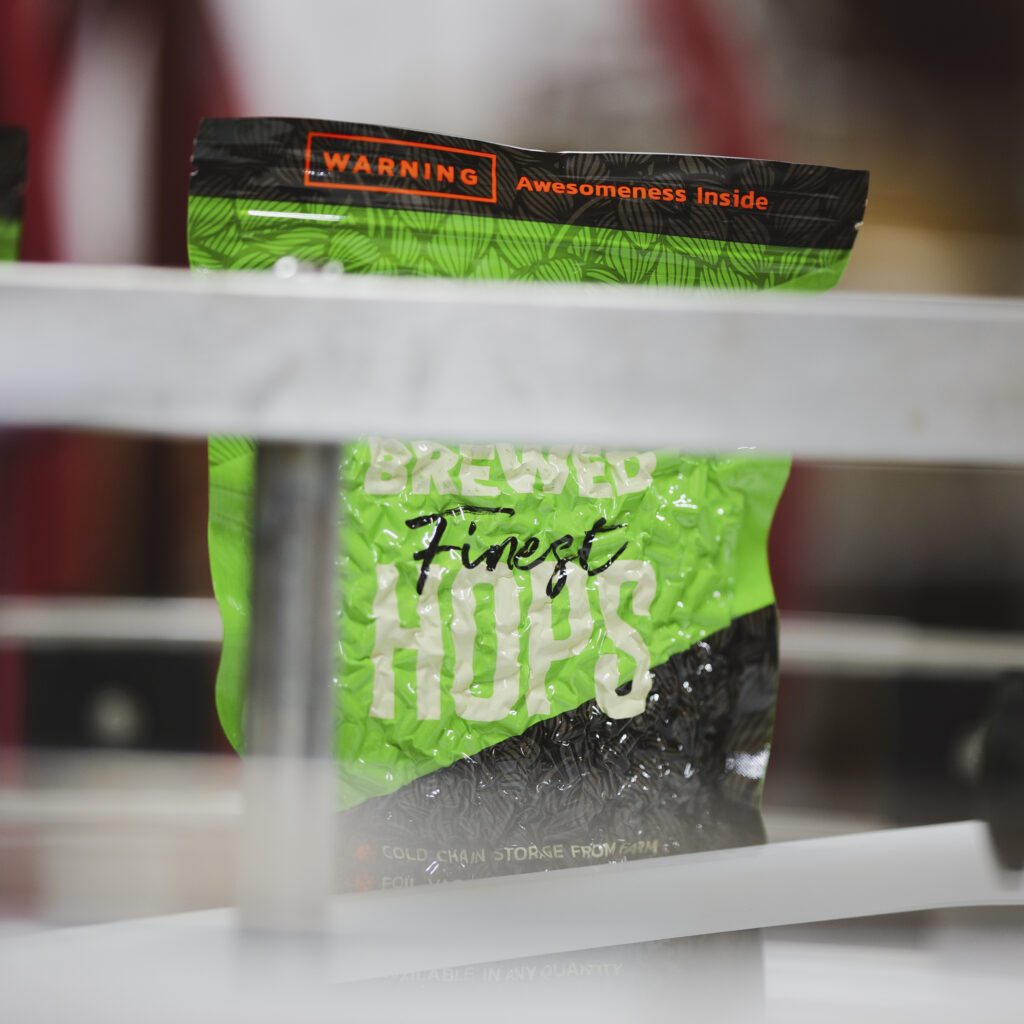
Hops require equal discipline. For several years, a surplus of global hops allowed breweries to rely on spot buying. That environment is tightening. Some varieties now require forward planning to secure a consistent supply.
Strategic hop planning includes forward contracting core varieties, evaluating crop-year stability, maintaining cold-chain discipline, and reviewing year-to-year variation in alpha and oil.
Certain varieties, such as Citra, remain stable when correctly cold-stored, which may present opportunities with older crop years, but only where storage and quality control are maintained.
Hop decisions influence flavour stability, brand identity and repeatability. They should be strategic, not opportunistic.

9. Yeast & Fermentation Integrity Cannot Be Compromised
Yeast is a living production partner.
Using a trusted, traceable supplier such as Fermentis reduces the often underestimated risk.
We have supported breweries experiencing unexplained fermentation issues, in which microbiological testing identified contamination, including in yeast slurry and, in one case, within sealed yeast packaging.
The savings on lower-cost yeast are negligible per litre. The risk to flavour, timelines and brand reputation is not.
There are no dedicated facilities for producing dried brewing yeast in Ireland. Dried brewing yeast requires specialist infrastructure and rigorous quality assurance systems. Brewers should ask clear questions about origin, manufacturing facility and traceability.
Branding may suggest locality, but production standards are what protect your beer.
During our visit to the Fermentis production facility at the Algist Bruggeman plant in Ghent in 2024, we saw advanced quality control systems, fully cleanable production lines, and enhanced processes for isolating contamination.
Predictability in fermentation protects consistency and reduces operational stress.
10. Technical Support & Process Control Protect Margin
Process aids are powerful tools when applied correctly. Through our partnership with Murphy & Son, breweries purchasing through Geterbrewed have access to advanced technical support and laboratory facilities. Support can include finings optimisation trials, water treatment adjustments, charge balance corrections, adaptation to raw material variations, and clarity troubleshooting.
Over-fining can create haze through charge imbalance. Under-fining leaves instability. Small technical corrections can materially improve clarity, cost efficiency and repeatability.
What can be done?
Technical discipline reduces risk and protects margin.
Distributors, retailers, suppliers and customers are not just channels; they are partners in whether your business grows steadily or struggles under pressure. The strength of those relationships often determines how problems are handled, how opportunities are presented and how confident others feel in backing your brand.
Relationships & Collaboration Matter
Clear communication, realistic expectations and shared commercial goals create stability. When margins are understood on both sides and standards are consistent, partnerships become sustainable rather than transactional.
Long-term success in brewing is built on relationships.
There is also a broader opportunity for Irish breweries to collaborate, particularly in export. A coordinated approach to building presence in new markets, sharing freight where appropriate and presenting a strong, quality-led Irish portfolio can strengthen perception internationally.
The Brewery Discipline Checklist
The fundamentals are straightforward. Quality must be measured and controlled, margins fully modelled, cashflow forecasted, direct revenue prioritised through taprooms and webshops, distribution planned realistically, branding kept consistent, data reviewed regularly and ingredient decisions made on performance. Yeast should be traceable and reliable, and technical support should be used rather than ignored.
These are not optional extras. They are operating standards.
Final Thought
The future of Irish brewing will be shaped by the standards operators choose to set now.
When quality is protected, margins are properly understood, and production decisions are made with long-term stability in mind, confidence grows across the supply chain. Retailers trust you, distributors engage properly, and customers return.
The breweries that continue to trade successfully over the coming years will be those who treat these disciplines seriously, even when pressure tempts shortcuts.
The opportunity remains strong. It simply demands consistency and commercial discipline.
Ready for a Brewery Sustainability Review?
If this resonates, we would welcome a practical conversation.
A Brewery Sustainability Review is not a sales pitch. It is a structured discussion about where you are now and where you want to be.
We can explore ingredient optimisation, efficiency and consistency, retail and export readiness, direct-to-consumer opportunities and technical challenges.
We also support marketing activation. Through our videographer, Hernan, we regularly create and distribute content for partner breweries across our social channels to drive awareness in both the trade and consumer spaces.
We care deeply about Irish brewing and are committed to supporting those building for the long term.
Let’s keep raising the standard together.