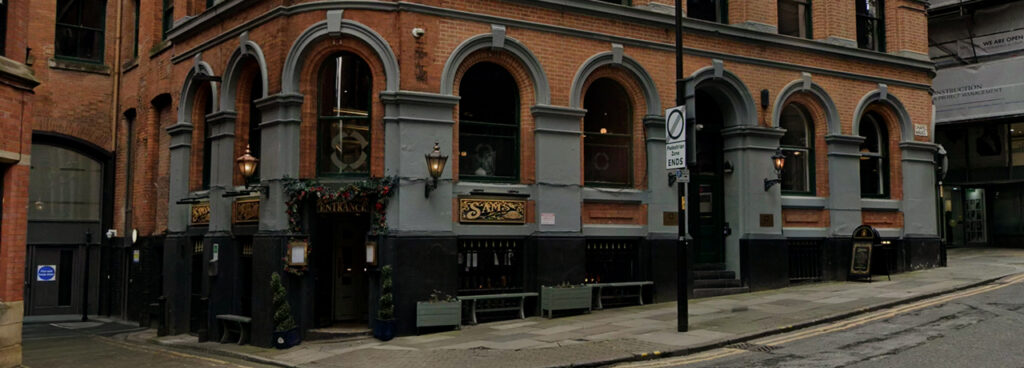
At the centre of the bar in the New Oxford, Salford, is a lineup that some Manchester drinkers have dubbed ‘The Holy Trinity’: Beamish, Murphys, Guinness. Heading across the River Irwell to Sam’s Chop House in the city centre another resolutely old-school beer, Boddingtons, is back on cask, with the pub reportedly struggling to keep up with demand. A couple of hours down the A6 to London, you’ll find the same beer on tap at Bethnal Green’s Kings Arms alongside its new house beer, Bass.
In production (in one form or another) since the late 18th century, Bass Pale Ale is as traditional an English brown bitter as you can imagine – ‘beer flavoured beer’ is how I’d describe it to someone who hasn’t tried it before. It’s also increasingly popular of late. An investment in the brand by owners AB-InBev (which also owns Boddingtons) has seen the number of pubs in the UK that stock it jump from 400 to around 1000. It’s even got a permanent listing at The Crown in Belfast, a city that’s no stranger to the brand’s livery on many of its pub exteriors.
Remarkably, over the past 12 months Bass has seen a 23% increase in sales. JW Lees – the Manchester brewer that’s producing Boddington’s under license – has told me that initially they didn’t have a big enough stock of casks to keep up with its rate of sale. Guinness, a beer that was introduced in its current form in 1959, but with a history stretching back far longer, is now the best selling beer by value in the UK. With similar consumer affection for its own nitro-stout brands, Heineken has reintroduced Beamish and Murphy’s to the market, no doubt with the hope it can take a bite of the same cherry. Nostalgia is back in a big way, and thanks to the deep pockets of their multinational backers, these brands in particular are well-positioned to ride the steep curve of its wave.
If you’re a small brewer, I imagine you might find reading the above somewhat frustrating, maybe even cringing at the religious comparison Mancunian drinkers have made of those stouts. I wouldn’t blame you for doing so, but for all the rose-tinted sensibility that is driving the fortunes of these brands, three of the world’s largest drinks entities: InBev, Heineken and Diageo, are now duking it out for space on the bar that’s already significantly limited by their own design.
It’s worth considering how each of these multinationals understands how genuine the pull of nostalgia is at the moment, and how deeply this is influencing the habits of beer drinkers. For small independent breweries, much of the past two decades has been centered around product innovation, and designing slick, modern brands that a new generation of early adopters wanted to be seen drinking. That market still exists in its own niche, although it’s not where the action is any longer. It’s a bit like what happened with real ale and CAMRA drinkers in the 1990s, and once again things have gone full circle.
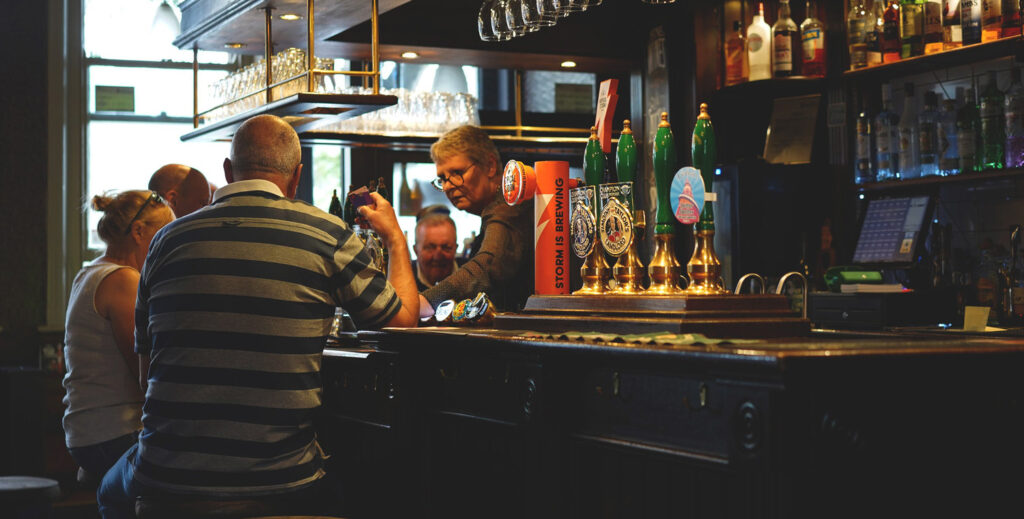
The craft beer generation has now sequestered into middle age, arguably more concerned with raising their families and paying their mortgages than they are investing in the latest hyped release. For them, the familiar is grounding. By centering those precious drinking experiences around the pub, and something that feels a bit slower and more traditional, they are making the most of that time.
For the younger generation of drinkers their aim is to be seen drinking something different than their parents – who by now might well have been drinking craft beer when they were still in nappies. They seem to be drawn to the traditional, whether that’s through internet or meme culture, or simply a desire to hold that Guinness/Bass/Boddington’s glass like its the latest fashion accessory because it feels different.
What’s interesting is that those in their early-to-mid 20’s who’re drinking ale or stout over a mass-produced lager are likely establishing themselves as ‘beer drinkers’ for the rest of their lives. While lager remains the most consumed beer style in the UK, it does feel like something is shifting, and lifelong habits are being formed. A walk around Manchester’s Northern Quarter or Shoreditch in East London and a quick glance at what people are drinking is confirmation enough that trends, and indeed, tastes are changing.
But what does this mean for smaller, independent brewers? And what, then, are the advantages that can be seized? Tradition and nostalgia are in vogue, so does that mean it’s time to order in some Invert #2 and brew up a resolutely old-school batch of bitter?
Well, yes and no.
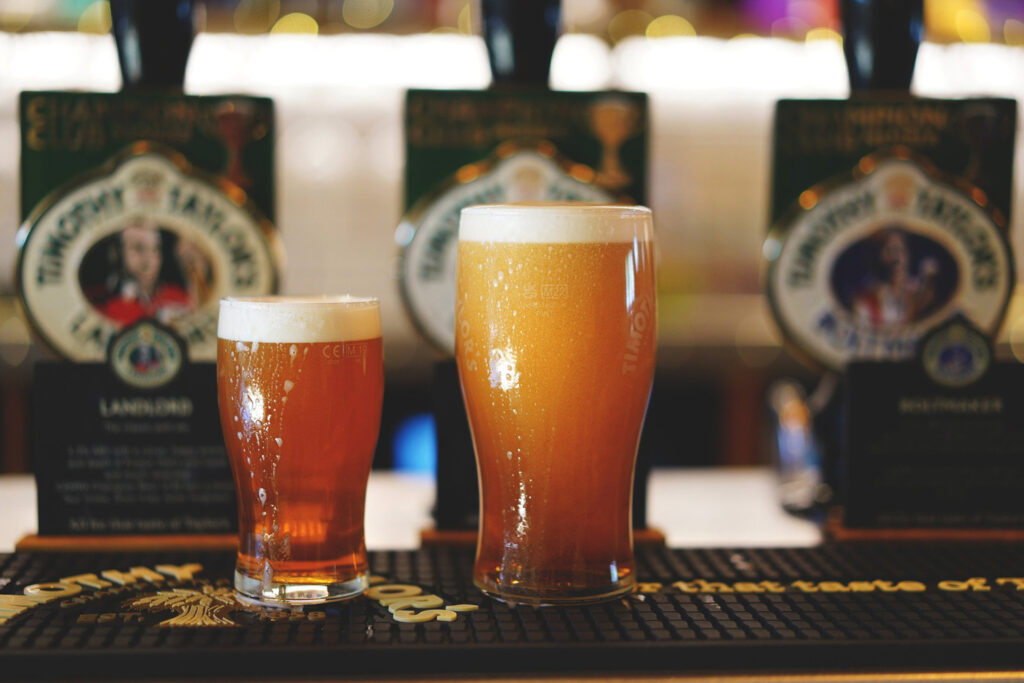
Something I genuinely believe is that, should a younger, more impressionable drinker choose stout or a traditional cask beer they will normalise these styles of beer for themselves. If you’re drinking Boddington’s from a handpull and understand that this is something you enjoy, suddenly a row of six handpulls in a different pub offering several unfamiliar brands might feel less alien – Timothy Taylor’s Brewery already understands this with Landlord, hence why you might have seen its advertising on many a hoarding around your local town.
In terms of stout, several small brands are leveraging its popularity, with one of my favourite examples being Anspach & Hobday’s London Black. This is a great example of leaning into nostalgia, because at its core the beer is based on their existing porter, with the recipe tweaked for nitrogen dispense and dialled down to a sessionable 4.4% – did I mention that pints (and a quantity of) are also part of this surge of nostalgia? That means the 4% ABV mark is suddenly something of a sweet spot.
London Black retained much of the character that made the brewery’s original porter so compelling – chocolate and toasted grain flavours that give it a bit more character than a typical mass-produced stout. However it is just a bit more, without being excessive. The beer retains an interesting flavour without being challenging, allowing it the opportunity to cross over into the mainstream.
But flavour alone wasn’t enough to ensure the success of this beer. It had to look the part in order to win hearts and minds, which for Anspach & Hobday meant a departure from its typical, character-led label design. Opting for a striking black and gold colour scheme with bold typography, they also moved away from describing the beer style and simply tied it to both its colour and its place. It also received its own glassware, with its gold lettering providing contrast to the deep, dark hue of the beer. The combination of great flavour and a bold look with a strong brand and a simple bar call gave it appeal in multitudes, allowing it to become a viral internet sensation in its own right.
Landlord too, meets these parameters in his own roundabout way – it’s a beer with simple yet discerning flavour, a strong, memorable brand, and a clear, easy to remember bar call. Next time you order a pint in a random pub, pay attention to whether or not you receive the beer in a branded glass. My money’s on that you will, as that association of brand is a key part of why I feel nostalgia is such a draw. Imagine getting a Landlord in a Proper Job glass!? If that elicits a similar feeling to, say, Guinness in a Carling glass, then you understand what I mean.
While I don’t think this means you need to be reaching for the Maris Otter, Caragold, or East Kent Goldings right away, it is worth considering how consumers are craving that sense of nostalgia, and how it might work for your own beer, or brewery. I have a feeling that this is a trend that isn’t going away anytime soon, at least not over the next 12 to 18 months. Things are cyclical, as we discussed, and what we once considered ‘modern’ will no doubt come back around again before the end of the decade.
While tradition and nostalgia is hot, who knows what the next revival could be? There are so many storied brands out there, many of them already owned by multinationals, that could be primed for success in the current market. Newcastle Brown Ale, Hobgoblin or White Shield, anyone? But it’s also worth considering that if a small brewery like Anspach & Hobday can leverage the popularity of a behemoth like Guinness into a modern, well-made beer with an appealing brand, that means there’s plenty of opportunity for those willing to make similar investments into their own product development while the going’s good.
— Matthew Curtis
Get ‘Er Brewed is proud to support Pellicle Magazine, which is owned and run by Matt. If you enjoy these blog posts, make sure you head over to pelliclemag.com and read their latest features, and listen to some of their fantastic podcast episodes.