I take a table and sit by myself with a pint at the back of a busy, Central Manchester pub. Opportunities like these are perfect for people watching and, importantly for me, taking stock of what people are drinking.
There’s a couple, or maybe two people on a date; one drinks a spritz, the other red wine. A few older gentlemen, probably in their late 50s or early 60s, congregate around the bar. They drink ale, Boddington’s in this particular establishment, or lager, Stella Artois. Then there’s a group of 20 somethings, a mix of seven or eight young men and women, laughing, smiling, and notably, they’re all on the pints.
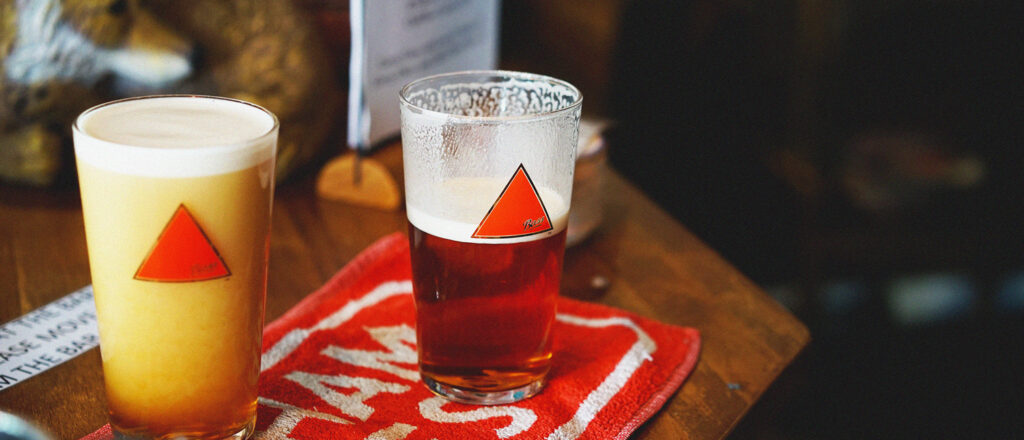
Guinness appears to be the most popular beverage on the table. The G is being regularly and resolutely split. But a couple of the young women are drinking Boddington’s, its distinctive yellow and black ‘B’ on the side of each glass of Manchester’s famous amber bitter. At least one of the men is on it too, and another is on the Stella. Notably, each beer has been served in an appropriately branded glass. As I continue to move my gaze around the pub, I consider that not only are 70 or 80 percent of its customers drinking beer, but every single pint has been served using an appropriately branded glass.
Heading back to the bar for another, I decide upon a pint from a small, local(ish) brewery, Abbeydale in Sheffield. For a moment, the person serving me disappears, ducking below the bar for reasons that are as-yet unknown to me. Seconds later they reappear, remarkably, with a correctly Abbeydale-branded glass with which to display my pint. This isn’t an afterthought; it’s deliberate attention to detail – one I consider to be indicative of a trend in UK beer and pub culture.
On my various pub visits, and travels around the UK, I am noticing with increasing frequency that beer from breweries big and small is more often than not served in a correctly branded glass. A half of Delirium Tremens in Lincoln is served to me in an appropriately elephant-trunked chalice; in Birmingham I witness the glorious gold on black on a tulip of Anspach & Hobday’s London Black; back in Manchester I enjoy the satisfyingly clunky feel of a thick mug of Budvar.
In certain corners of the internet it’s even become cringe to put beers in the wrong glass. Accounts like shitlondonguinness have demonstrated, quite effortlessly, how awkward it feels when this happens. In fact I think it’s this feeling, and accounts like this, that might be driving the desire to ensure the beer you’re enjoying is contained within the appropriate drinkware. While this might have initially taken root with a certain, ubiquitous stout brand, it feels like this has spread, with it now being a faux pas to serve pretty much any beer in the wrong glass.
While I appreciate this is not exactly a new phenomenon, it does feel like a departure from past experiences. It’s not simply about matching a product to its brand. This is about accessorising, and customers being proud to be seen with a particular pint in hand. This is about beer as part of a personal brand, and it’s something I consider that breweries of all shapes and sizes should be taking advantage of if they intend to remain part of the conversation. Because if a young drinker chooses your brand now, it could be one they stick with for life.
The Belgians have long understood the effectiveness of branded glassware, and have arguably taken it to its utmost extreme. If you have the gumption to order a bottle of Pawel Kwak, you will be served it in its infamous, bulbous test tube with a wooden stand, every time. In fact I remember 20 or so years ago when people would order it specifically because this happened. Which, of course, it would, because having the correct beer in the correct glass is part and parcel of Belgian beer culture. Not to mention part of how it has been elevated to having UNESCO Intangible Cultural Heritage status.
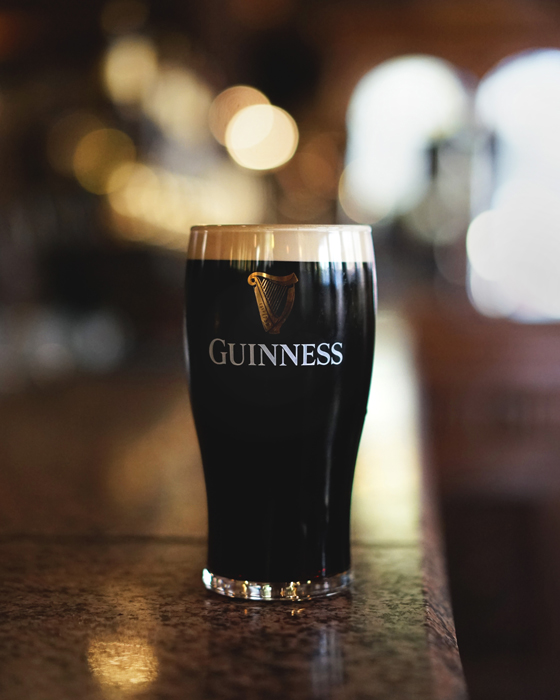
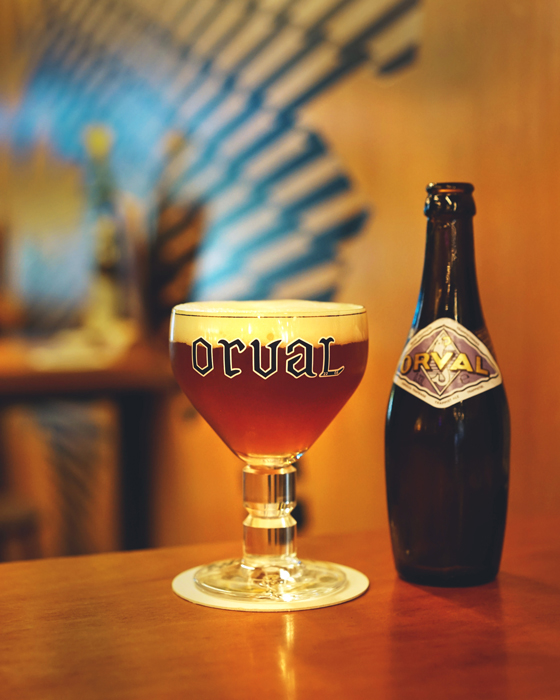
People know that Duvel is supposed to be served in its famous, ballon-shaped glass, Chimay an ornate chalice, and Mongozo Coconut in a hollowed-out coconut shell, because that has been baked into our psyches by the insistence of Belgian beer culture itself. It also means, like our friends on the Kwak, that you order a beer by association because of the brand and the glass it comes with. (Although never order Mongozo Coconut, unless you enjoy drinking sun tan lotion).
Other, perhaps more utilitarian examples of glassware-as-a-personality-choice can be found across Europe in Germany, and in the Czech Republic. In Munich, the litre maß-krug associated with Oktoberfest has become so entwined with visiting tourists that you get a funny look from your server when asking for a half-litre in a nice Willi Becher (actually the superior beer glass). In Prague, if you order a Pilsner Urquell – or, indeed, any beer – then after the tapster effortless pours a beer with that famous, thick head of foam, when placing the glass on the bar top, they will turn it, ensuring its logo is facing outward each and every time.
The iconic Stange (pronounced “SHTANG-uh”) of Cologne, and its associated beer Kölsch, has become so popular with brewers from the United States that now multiple breweries across America are offering what they called “Kölsch Service” complete with the small, rod-shaped glasses that are central to this culture. When something like this happens, the USP ceases to be about merely the beer itself, despite how delicious it may be. It’s about a moment, and associating a culture, or a brand with that experience.
This is why big brands have invested heavily in branded glassware for years, and right now, they are using this leverage to win over young drinkers who want to be seen with those brands. I mentioned Boddington’s earlier, which, like it’s sister brand, Bass, has spent the past few years languishing within the extended portfolio of the world’s largest beer maker, AB InBev. But with a recent surge in nostalgia, the beer giant saw an opportunity to make these brands relevant again. Both were given a tidy and refresh, both received new glassware to be sent out to new accounts that were stocking them, and suddenly thousands of young people are associating themselves with these brands, simply by holding a correctly branded beer glass in their hands.
This could be seen as another play by the multinationals to hide small, independent breweries from customers’ view. Ordering branded glassware and distributing it to your retailers is horrendously expensive – not to mention, yes people continue to steal glasses they find themselves particularly enamoured with after a few pints. These are just some reasons why, when visiting an independent bar or pub, you’ll more often than not find they use plain glassware. It’s simply not worth the cost or effort to maintain.
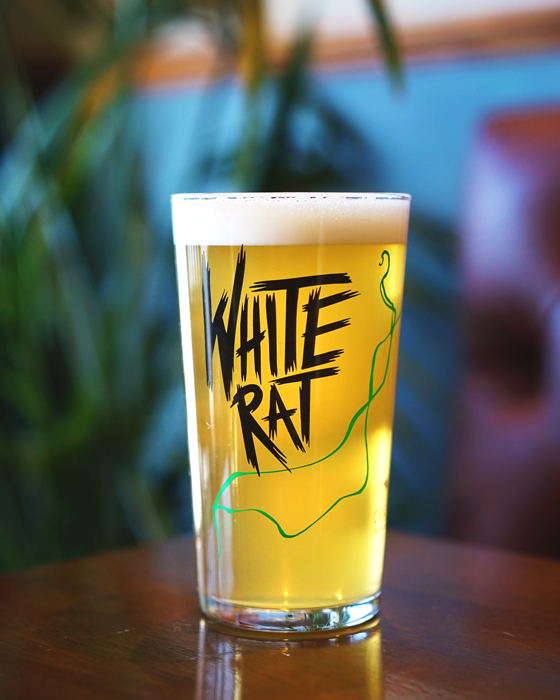
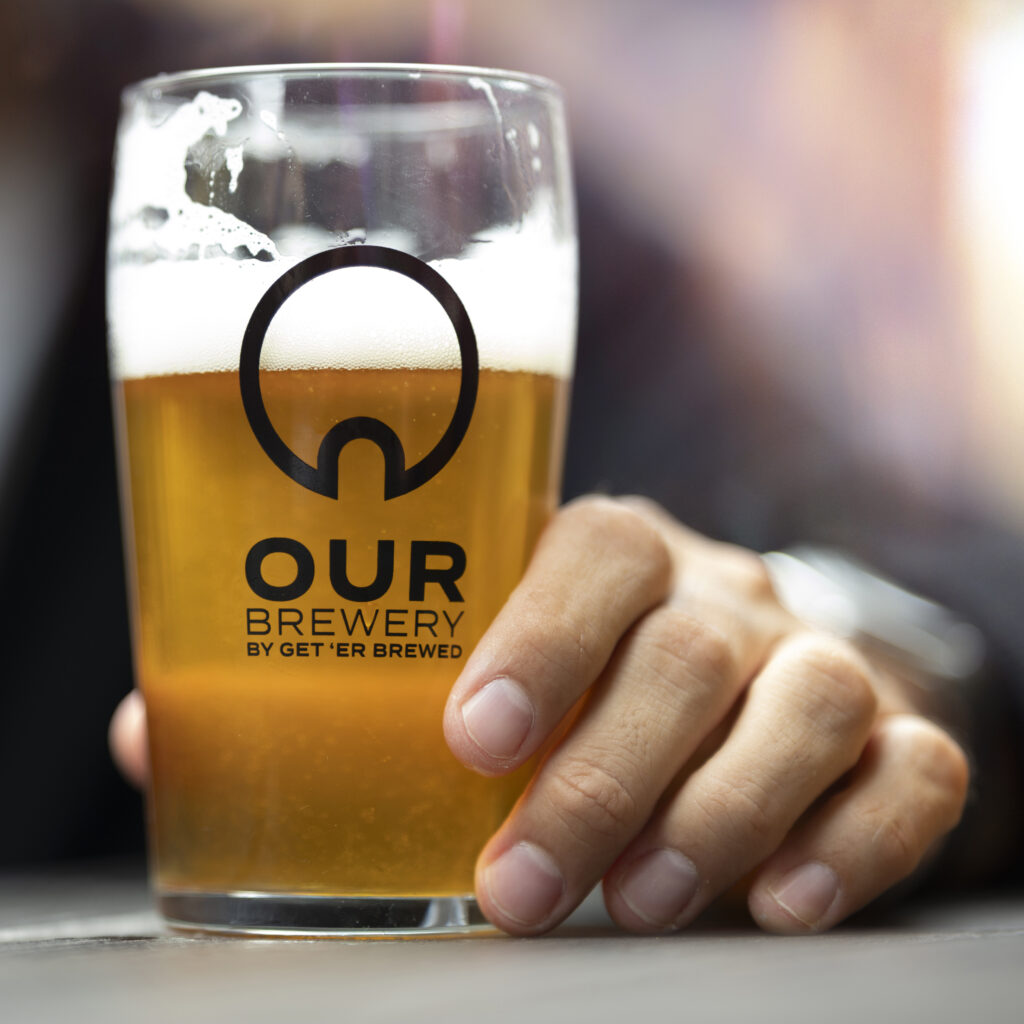
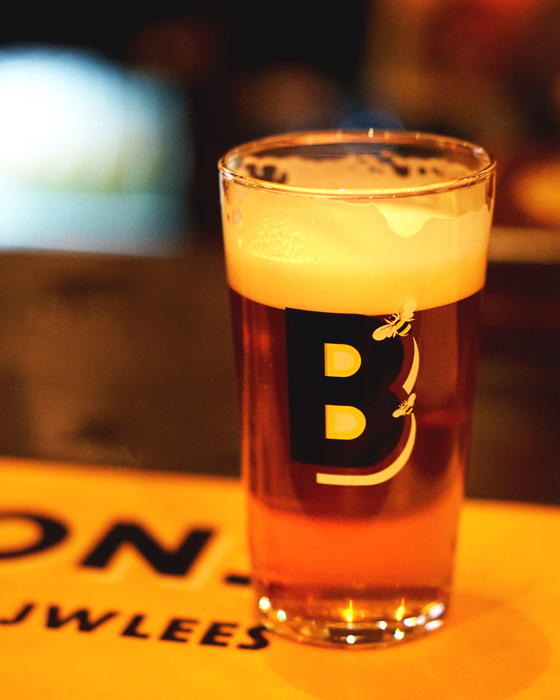
Or is it? There are now several glassware printing businesses in the UK that can handle small orders, and print them to a high quality. In fact many of these printers are used not just by independents, but by the multinationals themselves, which surely speaks of their quality. Thinking back to the bartender who fussed around beneath the bar to find the appropriate glass for my pint of Abbeydale Moonshine, it definitely feels like an increased opportunity to put your brand in the hand of someone who wants people to know what they’re drinking.
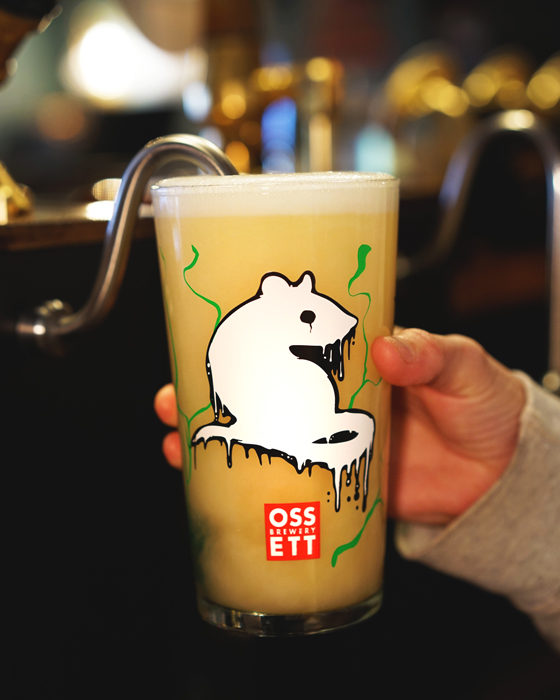
What I’m not talking about is the expensive process of having a custom mould created, as this would be financially out of reach for the majority of small breweries. But with there already being a wide selection of pre-made glass shapes and sizes, ensuring the one your customers are drinking your beer from is also advertising your beer feels like something of a no-brainer. There are already plenty of examples out in the wild, too. I can’t remember the last time I had a pint of Ossett White Rat that wasn’t served in one of its new glasses, for example. And, as someone who is known to enjoy a pint or two of Theakston’s Old Peculier, I noted how even this most prestigious of UK beer brands now has a brand new glass to accompany it. It’s gorgeous, I’m happy drinking from one, safe in the knowledge that everyone else in the pub is aware I’m back on the OP.
What’s interesting is, if you talk to enough people in and around the industry, there’s a sense that it might have somehow become “uncool”. This is definitely true of certain ideas, like “IPA” and capital-c “Craft Beer”, and for brands who resolutely fumbled the ball, like BrewDog. Returning to my table, with my appropriately branded pint, not only are most of the people in this pub, and the many others I drink on the beer, but they want you to know exactly what pint they’re drinking. It very much feels like something all breweries should be taking note of.
— Matthew Curtis
Get ‘Er Brewed is proud to support Pellicle Magazine, which is owned and run by Matt. If you enjoy these blog posts, make sure you head over to pelliclemag.com and read their latest features, and listen to some of their fantastic podcast episodes.