
Mead is one of the oldest alcoholic drinks in the world. At its heart, it is simple. Honey, water and yeast. That is all you need to turn honey into a drink that people have been making for thousands of years.
What surprises most people is how easy it is to make mead at home.
This recipe makes a 4-litre batch of mead using local honey, yerba mate tea and a small mix of botanicals. The tea and botanicals add colour, aroma and a gentle layer of flavour without overpowering the honey.
If you brew this in January, it gives the mead plenty of time to mature. By the time Christmas comes around again, you will have something special to open or give as a gift.
Let’s walk through the process step by step.
The Ingredients to Make Mead
4L Recipe with Honey, Tea and Botanicals
For this batch, you will need:
- 1.2 kg local honey
- 3.5 L boiled and cooled water
- 500 ml of boiling water for the tea infusion
- 2–3 yerba mate tea bags (or a tea you enjoy)
- 2–3 g dried hibiscus
- 1–2 g dried ginger
- 2–3 g dried citrus peel (orange or lemon)
- 1 sachet Fermentis BE-134 yeast
- 2 x 0.6 g Murphy & Son Yeast Vit
The honey is the main flavour of your mead, so use good local honey; it makes a real difference. The botanicals here give a light citrus and floral character. Hibiscus also adds a nice colour.
Equipment You’ll Need to Make Mead at Home
The equipment is very simple.
- Demijohn with bung and airlock
- Hydrometer
- Cleaning and sanitising equipment
That is really all you need to get started.
We also used a 200 x 150mm nylon bag for the tea and botanicals. Making it alot easer to take out the solids.
Brewing Stats
These are the targets for this recipe.
- Starting Gravity (SG): 1.085
- Final Gravity (FG): 1.001 – 1.002
- ABV: roughly 11–11.5%
- Fermentation Temperature: 20–22°C
The final numbers may vary slightly depending on the honey you use, but this gives a good guide.
Step 1: Make the Tea and Botanical Infusion
- Start by steeping your tea and botanicals.
- Add the yerba mate tea bags, hibiscus, ginger, and citrus peel to 500 ml of boiling water, then leave them to steep for 10 to 15 minutes.
- You can put the botanicals into a nylon bag to make straining easier later.
- Once the time is up, remove the solids. What you are left with is a strongly flavoured tea that will carry those flavours into the mead.
This method gives you flavour and colour without pulling out harsh notes.

Step 2: Add the Honey
- Pour 1.2 kg of honey into your demijohn.
- Then add the tea and botanical mixture.
- Give the demijohn a good swirl or stir to start dissolving the honey.
Honey is thick, so mixing at this stage helps everything combine properly. You can also put the honey in a hot water bath beforehand, which will make it a bit runnier.
Step 3: Prepare the Water
- Next, prepare your brewing water.
- Mix hot and cold water until you are close to your fermentation temperature. You want the liquid inside the demijohn to end up around 20 to 22°C.
- Add the yeast nutrient to the demijohn.
- Now top up with 3.5 litres of water.
- Give everything a really good mix. This helps dissolve the honey fully and adds oxygen, which the yeast needs at the start of fermentation.
Do not be shy about mixing here. The yeast will thank you for it.
Step 4: Take a Gravity Reading
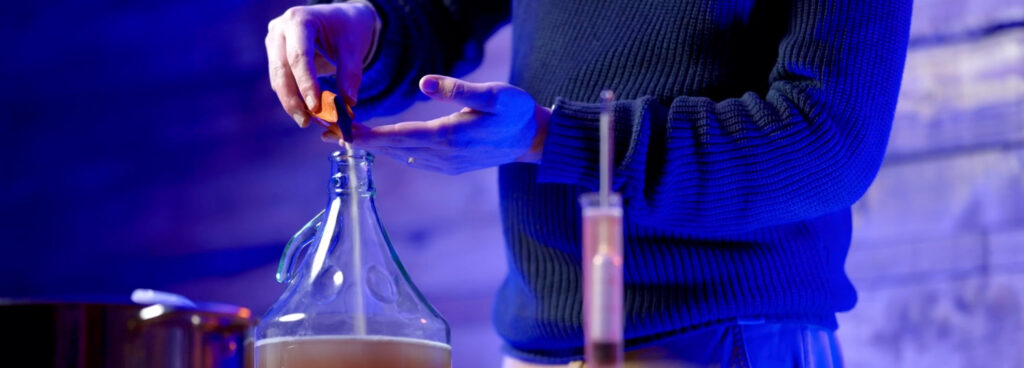
- Before adding yeast, take a hydrometer reading.
- For this recipe, you are aiming for around 1.085.
The exact number may move slightly depending on the honey you used. That is normal. This reading tells you how much sugar is available for fermentation and lets you estimate the final alcohol level.
Step 5: Pitch the Yeast
- Once everything is mixed and the temperature is right, it is time to add the yeast.
- Pitch the Fermentis BE-134 yeast directly into the demijohn.
- Fit the bung and airlock, and remember to add liquid to the airlock.
Your fermentation can now begin.
Step 6: Fermentation
Place the demijohn somewhere that stays around 20–22°C.
Within a day or two, you should see activity in the airlock. After about two days, add the second dose of Yeast Vit or Yeast Aid. This keeps the yeast healthy and helps it finish the fermentation cleanly.
Primary fermentation usually takes 2 to 4 weeks, depending on temperature and yeast activity. You will notice bubbling slow down as fermentation finishes.
Step 7: Check the Final Gravity
When things look quiet, take another hydrometer reading. You are looking for a final gravity around 1.000 to 1.002. If the gravity stays stable for three days, fermentation is complete.
At this point, you can rack the mead into a clean vessel for ageing.
Optional: Add Extra Botanicals
If you would like a little more aroma, you can add a small amount of botanicals after fermentation.
Something like:
- 1–2 g dried citrus peel
- or 1–2 g hibiscus
Let this steep for 3 to 5 days, then remove before bottling.
This step is optional, but it can add a nice finishing touch.
Bottling and Ageing
Once the mead has cleared, you can bottle it. Wine bottles or swing-top bottles both work well.
Mead improves a lot with time. It can taste young and sharp at first, but patience pays off.
- 3 months gives a noticeable improvement
- 6 months is even better
- 1 year is where it really shines
That is why starting a batch in January is a great idea. By the time Christmas arrives, you will have a matured homemade mead ready to enjoy or give away.
Final Thoughts
Mead may sound mysterious, but the process is straightforward. With just honey, water, yeast and a few botanicals, you can create a drink that people have been making for centuries. It is also a great project for homebrewers who usually make beer or cider. The equipment is simple, and the ingredients are easy to find.
Most importantly, it is satisfying to open a bottle months later and know you made it yourself. And if you start a batch now, next Christmas might include a bottle of your own mead on the table.