
Why your stout tastes thin is one of the most common questions brewers ask when working with dark beers.
The beer looks dark, smells roasty, and pours like a stout should — but when you taste it, it feels watery, sharp, or hollow. A good stout should be comforting, full-bodied, and smooth. It should coat the palate with roasted complexity, carry a stable creamy head, and finish with balance rather than sharpness. If you’re wondering why your stout tastes thin, the answer usually isn’t hops or yeast.
In most cases, a thin stout is a structure problem, not a flavour problem. Grain bill balance, mash temperature, pH, and fermentation all play a bigger role in mouthfeel than roast alone.
In this guide, we’ll break down why your stout tastes thin and show you practical, proven ways to fix it — starting in the mash tun.
Why Your Stout Tastes Thin in the First Place
One of the biggest misconceptions in brewing is that dark beers are automatically rich and full-bodied. In reality, colour and body are completely separate things.
You can brew a jet-black beer that drinks like flavoured water.
That’s because roasted malts provide colour and flavour, but very little body. In fact, heavily roasted grains can reduce perceived fullness if they dominate the grist.
A stout that relies too heavily on roast without enough supporting malt structure often ends up:
- Thin on the palate
- Sharp or acrid in finish
- Lacking head retention
- One-dimensional rather than rounded
To fix that, we need to think less about colour — and more about how the beer is built from the mash up.
What “Structure” Actually Means in a Stout
When brewers talk about structure, they’re referring to the elements that give beer:
- Body
- Mouthfeel
- Foam stability
- Balance
In a stout, structure comes primarily from:
- Base malt
- Body-building malts
- Mash profile
- pH control
- Balanced fermentation
Roast should sit on top of this structure — not replace it.
Grain Bill Mistakes That Cause a Thin Stout
Let’s start where structure begins: the grain bill.
A Common Mistake
Many stout recipes look something like this:
- Base malt
- A large amount of roasted barley
- Maybe one crystal malt
While this can produce dark colour and strong roast flavour, it often lacks mid-palate fullness.
A Better Starting Framework
A more balanced stout grain bill typically falls into these ranges:
- 65–75% base malt
Provides fermentable sugars, alcohol, and a foundational body. - 10–20% body-building malt (e.g. Flaked Barley, Oats, Munich,Vienna, Medium Crystal / Caramel Malts)
Adds mouthfeel, foam stability, and smooth malt depth. - 5–12% roasted malts (style-dependent) (e.g. Roasted Barley, Black Malt, Chocolate Malt)
Contributes colour and roast character without harshness.
This middle layer — the body-building malt — is where many thin stouts fall apart.
The Role of Stout Malt
Dedicated stout malts are designed specifically to fill the gap between pale base malt and aggressive roasted grains.
Using a stout malt such as MCI Stout Malt , or an ale malt likeMuntons Pale Ale (particularly for English-style stouts) allows brewers to:
- Build dark colour without excessive bitterness
- Add smooth roast and coffee notes
- Support perceived smoothness and malt depth, and contribute to mouthfeel when paired with a stout-friendly mash and grain bill
- Reduce reliance on heavily roasted grains
Rather than stacking roast on roast, stout malt helps create depth without sharpness.
The result is a beer that feels fuller and smoother — even at moderate alcohol levels.
Why Roast Alone Can Make a Stout Feel Thin
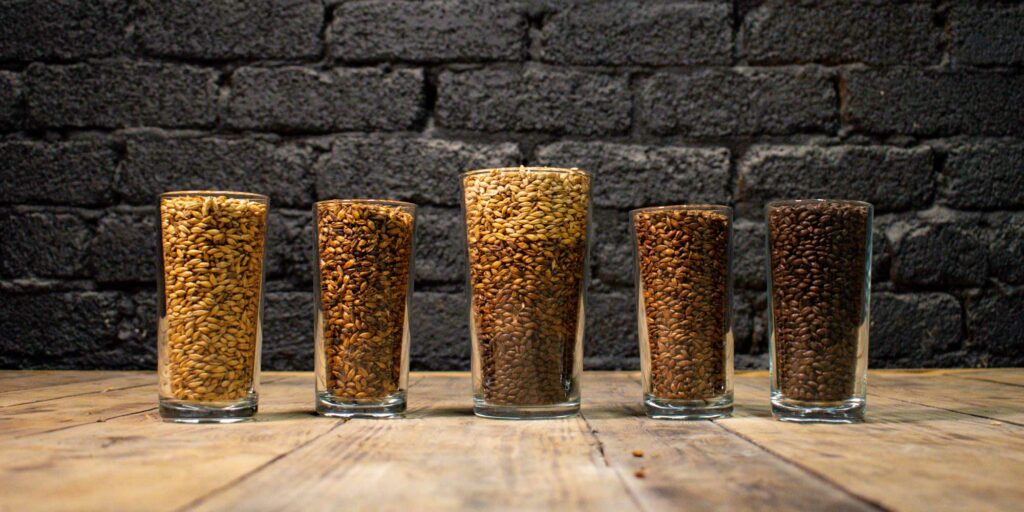
Roasted malts contribute:
- Colour
- Coffee, cocoa, and bitter chocolate notes
What they don’t contribute much of:
- Dextrins
- Proteins
- Residual mouthfeel
When roast dominates the grist:
- The beer can finish dry and hollow
- Bitterness becomes sharper
- Perceived body drops
This is why simply “adding more roasted barley” often makes a thin stout worse, not better.
Mash Temperature and Why It Affects Stout Body
Even with a well-designed grain bill, mash temperature can undo everything.
Low Mash Temperatures Can Make Your Stout Taste Thin
Mashing too low (around 63–65°C) produces a highly fermentable wort. That’s great for saisons or dry IPAs — but disastrous for most stouts.
Highly fermentable wort + attenuative yeast = Dry, thin, sharp stout
The Fix
For most stouts:
- Mash at 67–69°C
- This preserves dextrins
- Improves mouthfeel
- Softens roast perception
Especially in session-strength or dry stouts, mash temperature is critical.
Yeast: Balance Over Maximum Attenuation
While yeast is rarely the root cause of thin stout, it can make the problem worse.
Overly attenuative yeast strains can:
- Strip out the remaining body
- Emphasise roast bitterness
- Leave alcohol exposed
For stouts, balance matters more than dryness. You want:
- Clean fermentation
- Moderate attenuation
- Good flocculation
Let the malt do the talking — yeast should support, not dominate.
Yeast Suggestions:
- Fermentis: SafAle™ S-04 (classic English/Irish stout profile) or SafAle™ S-33 (better suited to malt-forward or specialty stouts rather than classic dry stouts)
- White Labs: WLP004 Irish Ale Yeast or WLP007 Dry English Ale Yeast (if available)
- Wyeast: Wyeast 1084 – Irish Ale or Wyeast 1968 – London ESB
Does Mash pH Make a Stout Taste Thin?
Yes — pH absolutely plays a role, and it’s one of the most overlooked factors in stout brewing.
Why Dark Beers Are Different
Dark malts naturally lower mash pH. In some cases, they can push pH too low.
When mash pH drops excessively:
- Body perception decreases
- Roast flavours become sharp or acrid
- The beer feels thinner and harsher
Target Mash pH for Stouts (And Why It Matters)
Aim for:
- 5.4–5.6 (measured at room temperature)
If pH drops much below this range, the stout can lose smoothness and balance.
Practical pH Tips
- Consider adding dark malts later in the mash or at vorlauf1 if your stouts tend to be sharp or acrid
- Adjust water chemistry before brewing
- Don’t assume dark beers “fix themselves”
Proper pH control is one of the biggest differences between a harsh stout and a silky one.

Foam & Mouthfeel: A Bonus Benefit of Structure
A well-structured stout doesn’t just taste better — it looks better too.
Benefits include:
- Improved head retention
- Creamier foam texture
- Better lacing
This is another area where body-building and stout malts quietly do their work behind the scenes.
The Big Takeaway
A thin stout isn’t a failure — it’s a signal.
It’s telling you that the beer:
- Lacks structural support
- Relies too heavily on roast
- Ferments too dry
- Or suffers from poor pH balance
Fixing it doesn’t require gimmicks or additives.
It requires:
- Thoughtful grain bill design
- Proper mash temperature
- Balanced fermentation
- Attention to pH
- And restraint with roast
Get the structure right, and everything else falls into place.
Final Thought
Great stouts aren’t built by making beer darker.
They’re built by layering malt intelligently, managing fermentation carefully, and respecting the role of structure.
Once you do that, the stout stops tasting thin — and starts tasting proper.
- Vorlauf is the step where you recirculate the first runnings of wort back into the mash before you start collecting wort into the kettle. ↩︎