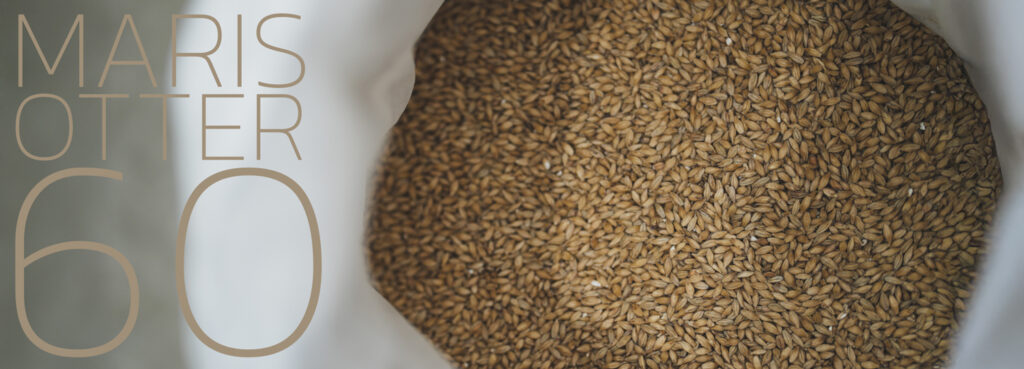
I have a tattoo of Maris Otter barley on my left forearm, and I absolutely love it.
The reasons for choosing this particular design to be permanently inked into my skin are numerous, but one is because, for me, it’s more than simply a humble grain, or brewing ingredient. Maris Otter, which celebrates the 60th anniversary of its development in 2025, represents the very spirit of beer itself. Its continued existence is an act of resilience – it is exceedingly rare for a commercial variety to have existed for so long – and the reason for this is because brewers keep asking for it, year after year. Maris Otter equals quality. Maris Otter equals flavour.
Although I must confess, my feelings towards the particular barley variety is not an original idea, but one instilled in me by someone else. When I first visited Crisp Maltings in Fakenham, Norfolk, early on in my career, I had the pleasure of meeting outgoing director Euan Macpherson. Ahead of a full tour of the maltings, where I learned first-hand the fundamentals of malt production, he told me that “malt is the soul of beer”, and that phrase has stuck with me ever since. Eventually, I decided to make my feelings about Maris Otter permanent.
Originally developed at the Plant Breeding Institute in Cambridge, it’s named for Maris Lane, the street near the borough of Trumpington on which the Institute’s old HQ resides. It might suddenly make sense why you’ve seen the name somewhere before, perhaps when picking up a bag of Maris Piper potatoes at the supermarket (which, yes, were also developed here.)
The development of Maris Otter was led by plant breeder George Douglas Hutton Bell and his team, who successfully crossed the Proctor and Pioneer varieties to create a low nitrogen, two row barley that was perfect for malting. Some might argue that its true birthday is 1966, when it was first made available commercially. After it was, it quickly became popular with breweries throughout the UK, and in the 1970s it was one of the most cultivated varieties in the country. By the 1980s however, its popularity began to wane, as cross pollination affected the strains genetic purity, and newer, more reliable varieties came onto the market.
For the majority of malting barleys, this would have been the end of the road. Most varieties have a shelf life of around five to seven years, maybe 10 if they’re lucky – and unlike Maris Otter most won’t share the honour of being marketed by name, largely due to this short lifespan. The world of plant breeding is cutthroat. Farmers are constantly seeking more agronomical varieties, which means, better disease and weather resistance, higher yields and bigger profit margins.
But for some reason, Maris Otter persisted, and that reason was because brewers kept asking for it by name. Although its production dwindled in the 1980s, its cultivation continued throughout, until in 1992 the sole rights to the variety were bought by grain merchant consortium H Banham Ltd and Robin Appel Ltd. The group would then go on to buy the rights outright, including the registered trademark, in 2002, and it is arguably their continued stewardship that is so heavily responsible for its longevity. “The beauty of Maris Otter is that it is a very forgiving malt,” Robin Appel told journalist Will Hawkes in 2015 for an article in All About Beer that marked its 50th anniversary.
Forgiving is certainly one way of putting it – perhaps understating how reliable it is in the brewhouse in terms of both extract, and the resulting flavour it can provide a beer with. Now considered a heritage variety due to its increasing years, it offers soft, biscuity sweet flavours, combined with a full mouthfeel that eschews a more jagged, grainy character in favour of rounded, almost creamy character. It works exceptionally well in traditional British beer styles, which is perhaps why 11 of the 15 beers to have won CAMRAs Champion Beer of Britain award between 2000 and 2015 made use of the variety.
What is true is that Maris Otters inherent agronomy means it won’t ever again be a dominant British crop like it was in its 1970s heyday. Instead it will remain a specialist, premium variety that commands a high price due to it not offering farmers the same yields and consistency as a more modern barley variety. Several of the UKs most prestigious malting companies still offer the variety, including Crisp, Muntons and Simpsons. It’s even malted overseas, with Belgium’s Dingemans also one of the maltsters to offer it.
The only negative about Maris Otter is perhaps more could have been done historically to reinforce its significance, perhaps like the French did with grape varieties such as Pinot Noir, Gamay and Chardonnay. Surely an exceptional example of a British best bitter has the flavour and quality to easily rival the finest Burgundy. The only reason one is considered to be more significant than the other is that the French knew exactly what they had and how to market it. If barley is simply thought of in agronomic terms and not cultural, or gastronomic terms, then it’ll never be granted the status that winemakers have bestowed on those beloved grape varieties.
Perhaps, now at 60, Maris Otter has the history and associated reverence to be considered in this way. It’s still used in some wonderful beers that deftly showcase its depth and quality with one example I always like to turn people to being Tribute from Cornwall’s St. Austell Brewery. Originally developed in 1999 as beer called ‘Daylight Robbery’ by brewer Roger Ryman (who sadly died in 2020 and is sorely missed) this beer uses Cornish grown Maris Otter to wonderful effect, matching biscuit and caramel notes to peppery, slightly citrusy Willamette hops. Another fine example is JHB from Peterborough’s Oakham Brewery. Although it relies on Maris Otter as its base malt for all of its beers, it’s perhaps here that its classic soft, biscuity character is most present, and a pint of JHB is surely one of the best ways to get to know this prestigious grain.
But what of Maris Otter and the future? How does heritage compete in a market that is so often locked in on new and exciting hop varieties, or yeast strains that will extract as much fruit flavour from these particular hops as possible? Well, this is where – perhaps somewhat unexpectedly – Maris Otter still shines.
“Maris Otter loves Mosaic”, at least according to brewer Toby McKenzie of Macclesfield’s RedWillow Brewery. In its flagship 4.2% ABV pale ale ‘Weightless’ there’s certainly oodles of mango and pineapple flavours from the latter. But it’s in that soft, subtly sweet, rounded character that these more intense characteristics find a place to settle, and mellow, enhancing its drinking experience so it becomes something complete, something whole. Although this is just one example of this grand old variety working so well with modern hops, if anything, it proves that there’s plenty of life in the old dog yet, and we can expect to enjoy many more beers made with it in the years to come.
— Matthew Curtis
Get ‘Er Brewed is proud to support Pellicle Magazine, which is owned and run by Matt. If you enjoy these blog posts, make sure you head over to pelliclemag.com and read their latest features, and listen to some of their fantastic podcast episodes.