It’s the middle of December as I write this, and the pubs are rammed. Drinkers close to home in the town of Stockport and a few miles up the road in nearby central Manchester are merrily getting in the Christmas spirit down their local. They might have chosen to go out for a nice meal, grab a few drinks with friends, or don the festive jumper and head out for a proper session. Regardless, all of it means pubs have deservedly been able to do some good business.
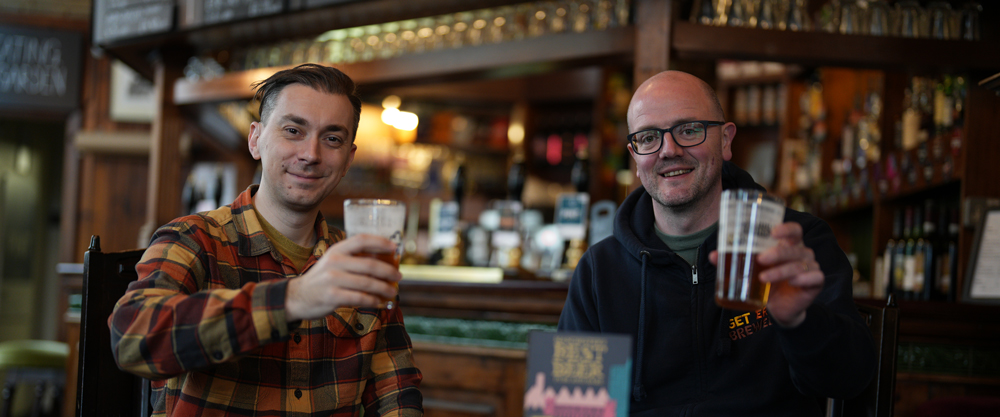
Come January, however, the mood may well have taken a far more melancholy turn, as belts are tightened and purses remain firmly closed. Pubs across the UK are facing a perfect storm of circumstances, making the cost of staying in business more challenging than I’ve ever known in my lifetime. Some of these challenges, such as increases to the national living wage, are ones I consider the owners of these businesses have to bear the burden of. Hospitality is only as good as the people serving you from behind the bar, after all, and those people deserve fair remuneration for their hard work.
Other challenges however, most notably a rise in business rates as a result of the current government’s November 2025 budget could represent the metaphorical straw that broke the camel’s back. Over the next three years the average British pub will expect to see an increase of £12,900 – one that lobbyists within the hospitality industry claim will cause mass closures of pubs up and down the country.
Before this, there was the squeeze of inflation, with the cost of food and drink in particular rising by far greater than the average rate, making the day to day cost of stock increasingly more cumbersome. Then there’s the drastic rise in the price of heating, electricity, water rates, insurance… all of which has to be taken into account before you get to the fact that customers still have less money in their pockets than they did a few years ago. With consumer spending power not likely to see any drastic improvement in 2026, the future of pubs and hospitality in the UK really does feel utterly and completely bleak.
But the thing is, even before this dire situation rose its ugly head, pubs have been closing in vast swathes. In fact, over 15,000 British pubs closed between 2000 and 2025 alone. Yet through all of this, many of them persevered, and despite the rising cost of living people still keep finding reasons to go out, whether that’s for a contemplative solo pint, or to catch up with dear friends over the sound of laughter and clinking glasses. Surely, despite everything, pubs have to persevere. They must.
I can face the hard facts and admit pubs are dealing with some of the worst trading conditions they’ve ever known. But I also believe that they will continue to persist, whether that’s through innovation and listening to what their customers want from them, or by sheer bloody-mindedness.
Despite all the doomsaying I consider that there are still positives for pub owners. However, in order to extract these an equally optimistic outlook is required from publicans. Yes, prices are going to have to go up. Customers are going to have to get used to them and measure their spending accordingly. But I don’t think this will mean that people will stop using pubs, and that they’ll simply vanish off the face of the earth.
For starters, despite numerous articles reporting the contrary, the youngest generation of drinkers and pubgoers seem to have found their love of pints. A lot of this will have to do with Generation Z getting a bit older, and probably starting to earn a bit more money, but you can’t argue that there’s also a strong trend indicating that the traditional has become fashionable again. Whether it’s the ubiquitous Guinness, or multinational-owned trad beers like Bass or Boddington’s, there’s evidence to suggest that these are the beers younger drinkers enjoy drinking. And if that means they’re out in the pubs as a result, that’s our first positive.
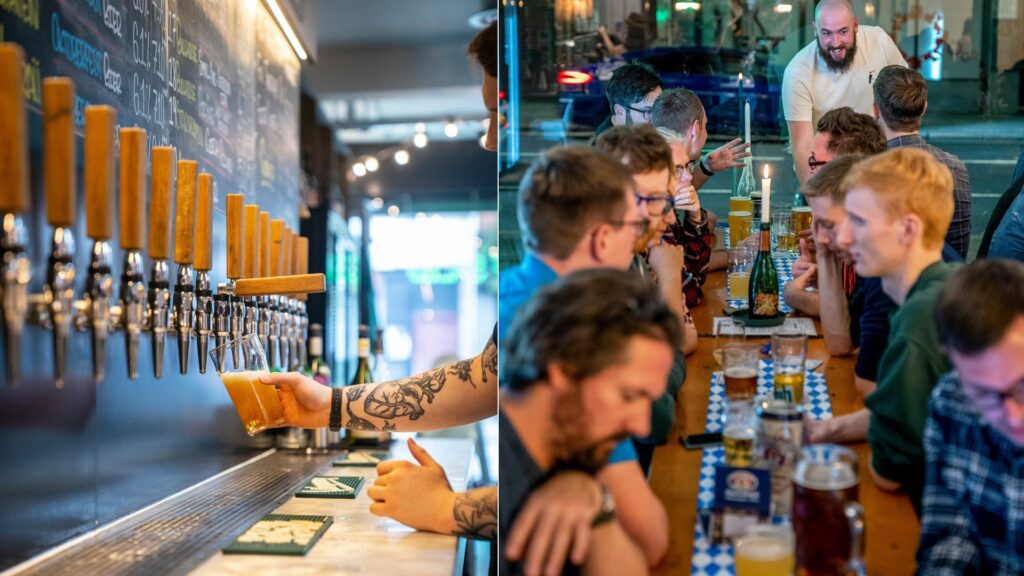
Then there’s the success of some relatively new pubs like The Devonshire in Soho, at the heart of London’s West End, and The Highland Laddie, just off Leeds’ busy Kirkstall Road. Under the stewardship of ebullient landlord Oisin Rogers, The Devonshire has become a hub for influencers and revellers alike. The pub downstairs reportedly serves around 20,000 pints of Guinness every week, but also does a roaring trade in Timothy Taylor’s Landlord – which recently was revealed as the best-selling cask beer in the UK. Combined with its high-quality restaurant upstairs, it seems to have perfected the formula of how to run a successful pub.
Up in Leeds, the Highland Laddie – formerly just The Highland – was a pub that had previously fallen on hard times, closing down in April 2023 and becoming one of the 15,000 casualties mentioned earlier. However, this gave its new owners, restaurateurs Sam Pullen and Nicole Deighton, not merely the opportunity to buy it free of tie, but to also inject a bit of their own je ne sais quoi into the building. This meant giving it a tasteful makeover, leaning on its retro credentials with a new paintjob and some vintage brewerania, making it feel like the kind of pub you’d expect to find on a visit to the West Yorkshire city.
With their experience from their city centre restaurant, The Empire Café, they also added a top end food offering, without taking away what made the pub tick – great beer and a bar area where access is never denied by a sea of reserved tables. It all clicked into place, and just a few months later The Highland Laddie was named as the best pub in the UK by the Good Food Guide. I’ve been twice, and can confirm it’s excellent whether you’re popping in for a three course meal, or a couple of quick pints.
It gives me hope that, if done properly, pubs still have the ingredients to succeed despite every single market condition seemingly being against them – but if people still want to go to the pub, and the pub still exists, then that’s exactly what will happen.
I do think there is another danger – an absolutely monstrous elephant in the room – in that it’s the independent part of the sector that will struggle the most. Larger pubcos and brewery-owned chains will continue to have a greater pot of resources to help enable their survival, but for me, it’s still at an independent where you’ll find the best pub experiences. It’s a similar situation for their suppliers, with many of them being strangled out while the likes of Heineken, Diageo and AB InBev continue to work on manipulating what beers are actually on sale.
However, I also think about those younger drinkers – who enjoy a stout here, or a cask bitter there – and how those initial experiences with bigger brands have the potential to remove the barrier of entry to independently produced products by making them feel less intimidating. This means it’s up to the brewers, distributors, landlords and publicans to ensure that the offering is there to make sure this actually happens.
If we lie down and accept defeat then the pub landscape will only become bleaker still. If we stand up and work hard on telling people why great beer in a great pub is still one of the best, most rewarding experiences you can have, then pubs will continue to survive. They have to. And it’s from a seat at the bar with a roaring fire in the corner and a pint in your hand that the fight against the continued encroachment of mundanity begins.
— Matthew Curtis
Get ‘Er Brewed is proud to support Pellicle Magazine, which is owned and run by Matt. If you enjoy these blog posts, make sure you head over to pelliclemag.com and read their latest features, and listen to some of their fantastic podcast episodes.